A digital transformation project for a small or medium-sized business can cost from around £2,500 for a focused improvement to more than £250,000 for a complex, business-wide programme. The useful figure is not an average price. It is the cost of solving a defined business problem, including discovery, implementation, data, security, training and ongoing operation.
The short answer
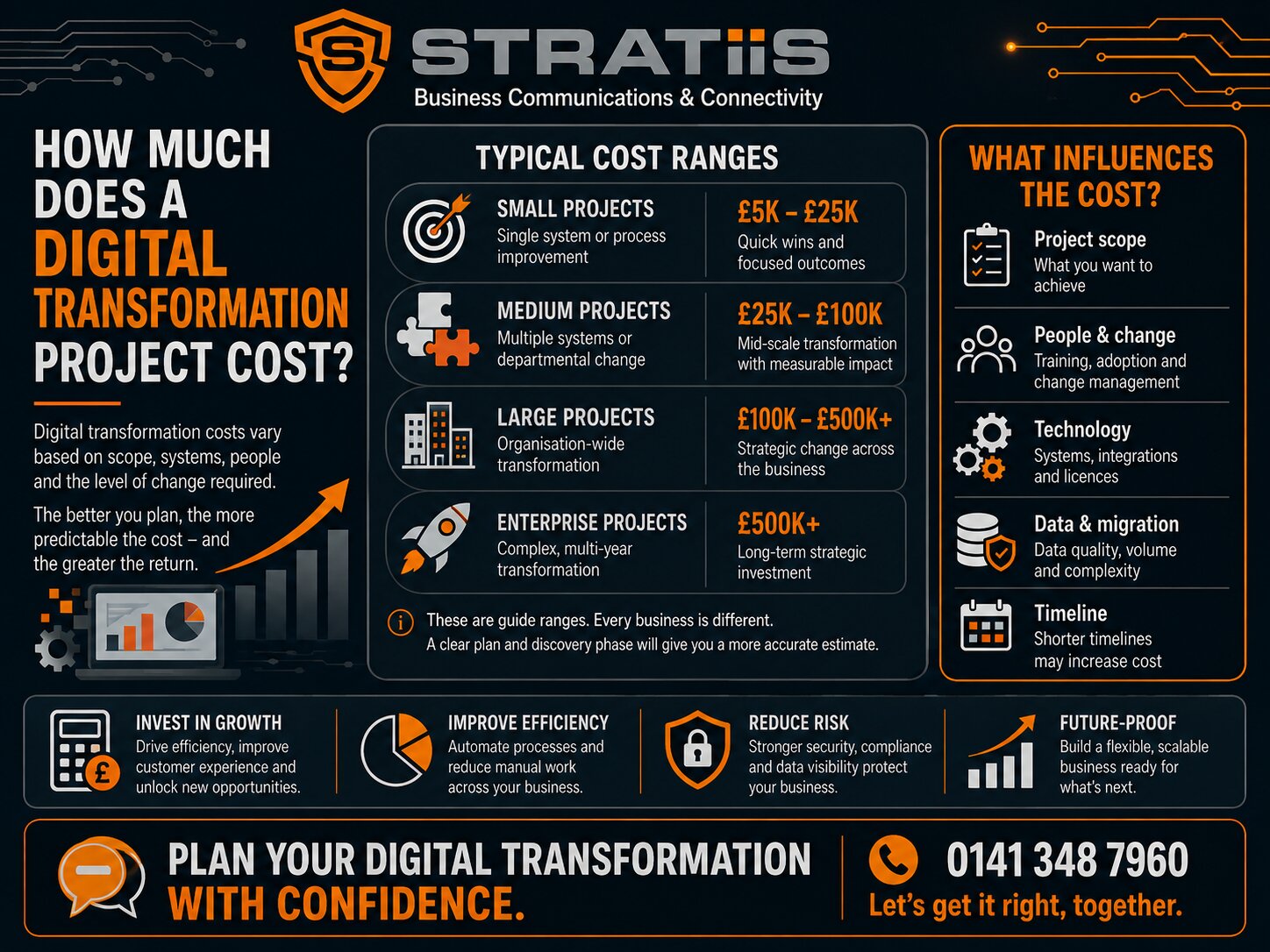
For early planning, allow approximately £2,500–£10,000 for discovery or a small workflow, £10,000–£25,000 for a focused Microsoft 365 or departmental project, £25,000–£75,000 for a significant cloud, workplace or business-system change, and £75,000–£250,000+ for a multi-department or multi-site programme. These ranges exclude VAT and are not quotations.
In this guide
CHAPTER 1Typical Digital Transformation Cost Bands
The phrase digital transformation can describe a single automated approval or a complete change to systems, data and working practices. These planning ranges help leadership teams set an initial budget before discovery.
| Indicative budget | Typical scope | Suitable starting point |
|---|---|---|
| £2,500–£10,000 | Discovery, assessment, a small workflow or a tightly defined process improvement. | One team, limited data and few dependencies. |
| £10,000–£25,000 | A focused Microsoft 365, SharePoint, device-management or departmental project. | A clear outcome with manageable migration and training. |
| £25,000–£75,000 | Cloud migration, workplace transformation, significant automation or business-system change. | Several workstreams, suppliers or departments. |
| £75,000–£250,000+ | A business-wide, multi-site or complex data and application programme. | Phased delivery with formal governance and change management. |
Before discussing products, agree What Is Digital Transformation for a Small or Medium-Sized Business? and define the measurable result the project must produce.
CHAPTER 2What Determines the Cost?
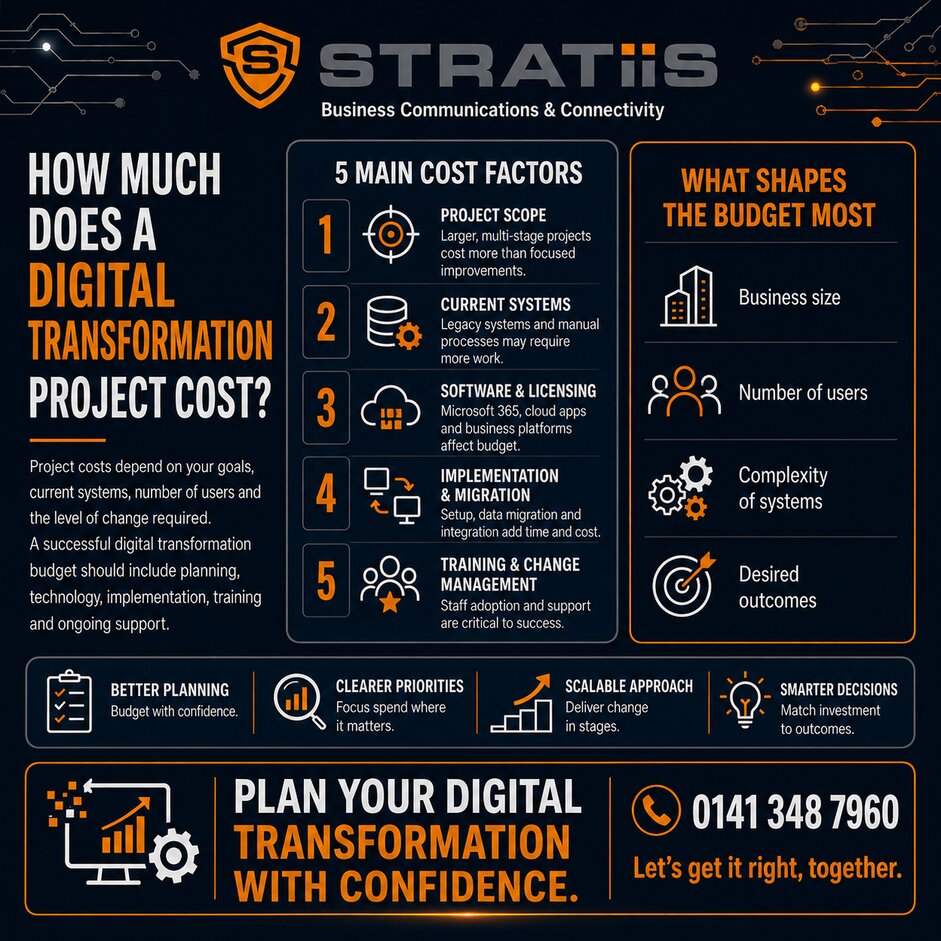
The price reflects the work, uncertainty and business risk involved. A well-standardised 100-user organisation can be easier to transform than a 30-user business with ageing devices, undocumented systems and disorganised data.
People and locations
More roles, devices, sites and working patterns increase communication, training, deployment and support effort.
Existing technology
Unsupported hardware, inconsistent configurations and unclear ownership add remediation and testing.
Data condition
Duplicates, obsolete records, complex permissions and unclear retention increase migration work.
Systems and integration
Each application, supplier, connector and data flow adds design, coordination and exception handling.
Security and compliance
Identity, device, backup, monitoring, audit and regulatory controls must be designed and evidenced.
Change and adoption
Workshops, testing, role-based training and post-launch support turn a technical installation into a usable service.
CHAPTER 3Typical Costs by Project Type
Projects with similar names can still have very different scopes. The ranges below are indicative UK SME planning figures, excluding VAT, licensing and major hardware unless stated.
| Project type | Indicative range | What usually drives the range |
|---|---|---|
| Discovery and roadmap | £2,500–£10,000 | Departments, systems, workshops, risk analysis and detail required. |
| Small process improvement | £2,500–£10,000 | Workflow steps, approvals, exceptions, testing and documentation. |
| Microsoft 365 improvement | £5,000–£25,000 | Identity, Teams, Intune, security, data and user adoption. |
| SharePoint and document management | £10,000–£50,000+ | Information architecture, permissions, data quality, migration and governance. |
| Cloud Services or server migration | £15,000–£75,000+ | Applications, data volume, networks, recovery, cutover and decommissioning. |
| Device management and modern workplace | £5,000–£25,000 | Device condition, enrolment, policies, applications and replacement needs. |
| Business-wide transformation | £50,000–£250,000+ | Multiple workstreams, data, integrations, suppliers, sites and organisational change. |
CHAPTER 4What Should a Digital Transformation Quotation Include?
A useful proposal explains the outcome as well as the technology. It should make the assumptions and responsibilities clear enough for decision makers to compare scope, risk and total cost.
Business outcome
The problem, target result, success measures and employees affected.
Scope and deliverables
Systems, data, sites, workstreams, documentation and outputs included.
Responsibilities
What the provider, internal team and third-party suppliers must each deliver.
Plan and governance
Stages, decisions, risks, dependencies, timetable and project reporting.
Testing and adoption
Pilots, acceptance criteria, training, communication and post-launch support.
Commercial detail
Project price, licences, hardware, expenses, recurring costs, exclusions and change control.
The wider Projects and Digital Transformation service can coordinate discovery, design, suppliers, delivery and adoption around a clear business objective.
CHAPTER 5Costs That Are Commonly Missed
A headline implementation price may leave out connected costs. Include them in the business case before comparing options.
Licences and consumption
Microsoft 365, Azure, Power Platform, backup, security and specialist applications may create recurring charges.
Hardware and connectivity
Old devices, firewalls, Wi-Fi, servers or internet circuits may need replacement or improvement.
Data preparation
Employees need time to classify, clean, retain, delete and validate information before migration.
Third-party suppliers
Software vendors may charge for access, exports, integrations, testing or professional services.
Dual running and contingency
Old and new services may overlap. Complex projects may need a contingency of around 10%–20%.
Ongoing operation
Monitoring, support, administration, optimisation and future training continue after launch.
CHAPTER 6Example Digital Transformation Budgets
These examples show how scope changes the budget. They illustrate planning ranges rather than fixed Stratiis prices.
25-person professional firm
Discovery, SharePoint structure, file migration, permissions, Teams configuration, security and employee training.
50-person hybrid business
Device management, Conditional Access, modern deployment, SharePoint improvements, two workflows and adoption support.
100-person multi-site organisation
Roadmap, cloud and server migration, document management, connectivity, backup, security and phased training.
CHAPTER 7Fixed Price, Time and Materials or Phased Delivery?
| Model | Best suited to | What to control |
|---|---|---|
| Fixed price | Clear requirements, assessed data and agreed responsibilities. | Assumptions, exclusions, acceptance criteria and change requests. |
| Time and materials | Evolving requirements, poorly documented systems or experimental work. | Budget limits, reporting, priorities and frequent review points. |
| Phased delivery | Larger programmes where value and risk should be tested progressively. | Objectives, dependencies and approval criteria for every phase. |
A common sequence is discovery and roadmap, foundations and security, migration, process improvement, employee adoption and ongoing optimisation. Each phase can be scoped and approved using the evidence from the previous stage.
CHAPTER 8How Can a Business Control the Cost?
Start with the problem
Define the operational issue, risk or customer outcome before selecting a product.
Complete discovery
Identify data, applications, suppliers, security needs and internal responsibilities.
Prioritise value
Address the highest risk or most costly repeated work before lower-impact improvements.
Use suitable existing tools
Use capabilities already available through Microsoft 365 where they genuinely fit.
Pilot and phase
Test with a representative group before committing to a wider rollout.
Control decisions and changes
Appoint a sponsor and assess every new request for cost, schedule, risk and training impact.
Organisations with internal IT can use Co-Managed IT Services for specialist capacity and project support. Leadership teams that need a roadmap, priorities and investment planning can use vCIO Services.
CHAPTER 9How Should Return on Investment Be Measured?
Compare the full project and operating cost with measurable improvements such as employee time saved, fewer errors, lower downtime, faster onboarding, improved customer response, reduced technology duplication and better management information.
A simple ROI example
If an automation saves ten employees 30 minutes each week, it releases about 240 hours over a 48-week working year. At a total employment cost of £30 per hour, that represents approximately £7,200 of employee time each year. A £10,000 project that removes most of the work could potentially recover its cost within two years, before considering accuracy, capacity or service improvements.
Risk reduction and resilience may not produce a simple cash saving, but they still belong in the business case. Include the likely effect of outages, cyber incidents, unsupported systems and lost information.
Common Questions About Digital Transformation Costs
How much does a small digital transformation project cost?
A focused SME project may cost around £2,500–£10,000. This could cover a small workflow, Microsoft 365 improvement or clearly defined process change.
How much does a larger SME transformation cost?
A significant cloud, SharePoint, device-management or multi-department project may cost £25,000–£75,000. Complex programmes can exceed £100,000 and should normally be phased.
Are licences included in the project price?
Not always. Microsoft, cloud, backup, cybersecurity and third-party licences are often separate recurring costs. The proposal should distinguish them from professional services.
Is discovery charged separately?
It may be. Paid discovery can produce a reliable scope, technical design and budget before the organisation commits to a complex implementation.
Should we include contingency?
A contingency of around 10%–20% may be sensible where systems, integrations or data are not fully understood. Better discovery should reduce uncertainty.
Can digital transformation be delivered in phases?
Yes. Phased delivery spreads cost, reduces risk and lets the organisation confirm value before approving later work.
Planning a Digital Transformation Project in Scotland?
Stratiis can assess your current environment, define the business outcome, identify dependencies and build a realistic phased budget.